For Colorado homeowners 62 and older
Let your home help pay for the care that keeps you in it.
A reverse mortgage is not a free house program. It is a cash-flow tool that can turn part of your home’s equity into a line of credit, monthly payments, or a lump sum, while you keep living in your home.
For many people, that money pays for the help that makes staying home possible. For others, it pays off a mortgage or fills a gap in retirement income. Either way, it has real tradeoffs, and we explain both.
We guide. You choose. Clear answers, no pressure. Your spouse, your kids, and your advisor are welcome at the table.
About the reputation
You have probably heard things about reverse mortgages. Some of it was true, for the product as it existed years ago.
Around 2013 and 2014, FHA and HUD changed the rules. Today every borrower goes through a financial assessment, an eligible spouse who is not on the loan has added protections, and everyone completes independent HUD-approved counseling before anything closes.
The version people warned you about is not the one we are talking about.
What it is, and what it isn’t
What it is
- A loan for homeowners 62 and older, secured by the home
- You keep the title and keep living in the home
- No required monthly mortgage payment
- Repaid when the last borrower sells, passes away, or moves out for good
What it isn’t
It is not free money, and it is not a way out of owning a home. You still pay property taxes, homeowners insurance, any HOA dues, and upkeep. If those are already hard to cover, the issue is the homeownership budget, and we will tell you so.
Three things shape the numbers
We call it APE. A financial assessment still applies.
What it can pay for
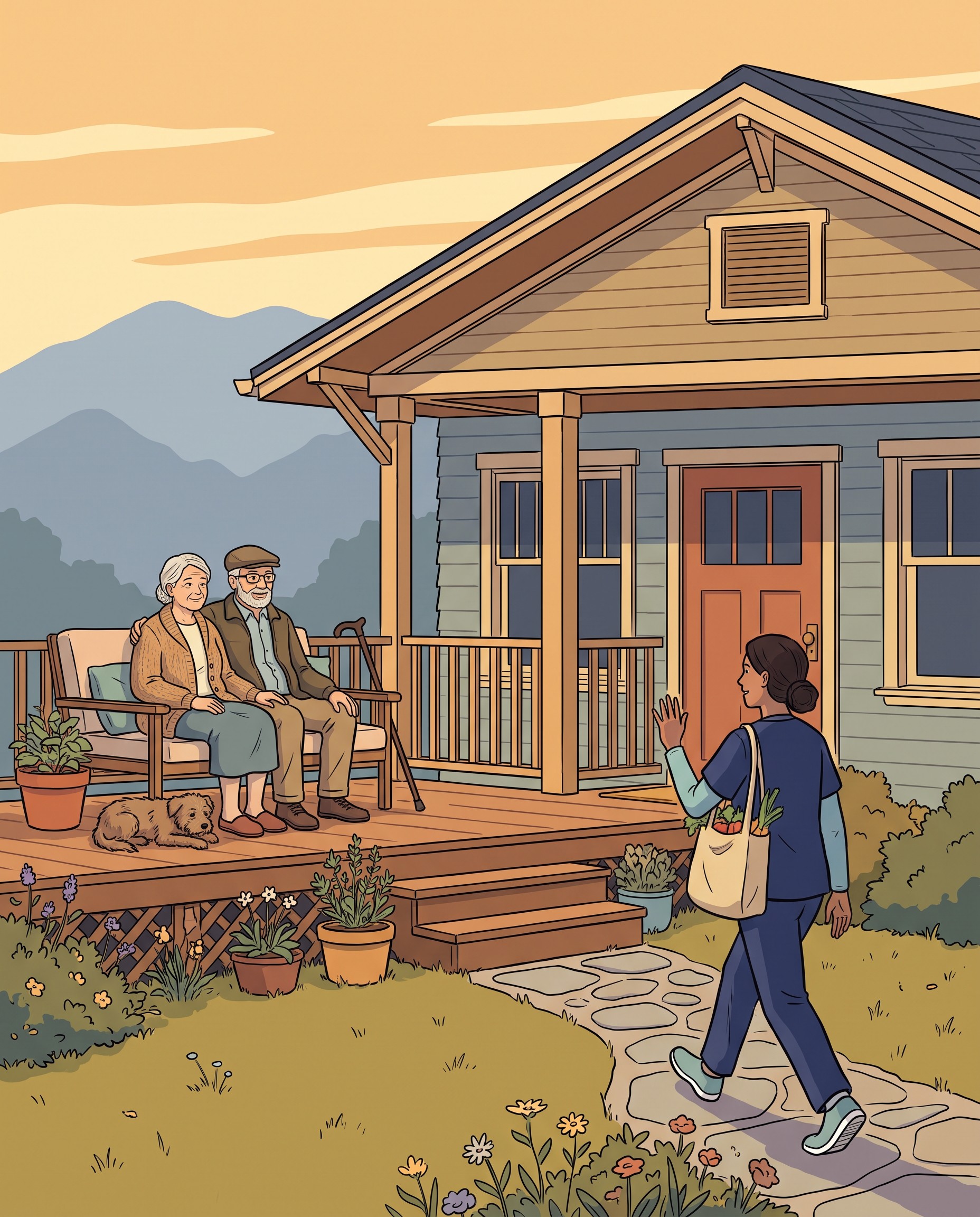
Most people want to grow older at home. Paid help at home runs a median of $35 an hour, and Medicare does not cover it.
Planning ahead
A line of credit that waits
Open it before you need it. The unused part grows over time, so more can be available later. Draw only what you need, when you need it.
Steady needs
Monthly payments
A set amount every month to cover care, or to add to Social Security and other income.
Other common uses
- Pay off your current mortgage and free up that monthly payment
- Fund grab bars, a walk-in shower, or a ramp
- Buy a home that fits this stage of life, without a monthly mortgage payment
- Take a lump sum for a large expense, used carefully
The honest tradeoffs
It costs more upfront. Fees are higher than a regular mortgage. Part of that is FHA mortgage insurance, which protects you and your heirs.
Equity shrinks over time. Interest, insurance, and fees are added to the balance. You trade future equity for flexibility now.
It is built for living at home. If the last borrower lives away from the home for more than 12 months in a row, including in assisted living or a nursing home, the loan becomes due.
Benefits have their own rules. If you receive Medicaid or SSI, talk with an elder-law attorney first.
The real question is fit: does the flexibility outweigh the cost for your plan?

The house you spent decades paying for can pay for the help that lets you stay in it.
The questions families ask first
Do I lose my home?
No. You keep the title and stay in the home as long as you meet the loan terms: live there, pay taxes and insurance, and keep it up.
Can my spouse stay?
Yes, when both are borrowers. An eligible spouse under 62 can also be protected. This gets set up at the start, so it is worth talking through together.
What about my kids?
Your heirs can keep the home by paying off the loan, or sell it and keep what is left. They never owe more than the home is worth.
It may fit if
- You are 62 or older with meaningful equity
- You plan to stay in your home for the long run
- You want more monthly breathing room or a safety net for care
- You can keep up with taxes, insurance, and upkeep
It may not fit if
You expect to move soon, a facility is the likely next step, or leaving the most equity to heirs is the top priority. If that is you, we will say so.
A conversation, not a commitment
Booking a call does not start a loan or pull your credit. Here is what happens.
Bring your spouse, your kids, or your advisor. There is no right answer today, only a better understanding.
Three questions below. They are not qualification questions, and there are no wrong answers.
Or call or text 303-929-4700.
Reverse mortgage refers to the FHA-insured Home Equity Conversion Mortgage (HECM). Borrowers must be 62 or older, occupy the home as a primary residence, complete HUD-approved counseling, and continue to pay property taxes, homeowners insurance, and any HOA dues, and maintain the home. Failing to meet these obligations can cause the loan to become due, and the home may be subject to foreclosure. The loan balance grows over time as interest, mortgage insurance, and fees accrue. The loan becomes due when the last borrower sells, passes away, or no longer lives in the home as a principal residence, including an absence of more than 12 consecutive months due to physical or mental illness. Line of credit growth applies only to the unused portion and is not interest earned. Loan proceeds may affect Medicaid and SSI eligibility; consult an elder-law attorney or benefits specialist. Cost-of-care figures: CareScout 2025 Cost of Care Survey; AARP 2024 Home and Community Preferences Survey; U.S. Administration for Community Living. This material is not from HUD or FHA and was not approved by HUD or any government agency. This is not a commitment to lend.